ESG and Green Finance: What It Means for Small and Mid-Sized Businesses
by Sovina Vijaykumar
Environmental, social, and governance standards used to feel like a large-company problem. That assumption no longer holds. Banks, insurers, and even local suppliers now ask smaller firms about carbon footprints and labor practices. Owners who once ignored these questions face a different market in 2026.
Why ESG Now Reaches Smaller Firms
Large corporations drove early ESG rules. Their suppliers, however, absorbed the real work. A retailer with net-zero goals pushes those targets down its supply chain. A regional manufacturer suddenly must report emissions data it never tracked before.
Regulators have noticed this shift too. Frameworks built for big companies now trickle toward smaller ones through voluntary standards and disclosure requests. California’s climate disclosure law, for example, reaches many mid-sized firms with ties to California.
Consumer expectations add more pressure. Surveys show many shoppers switch brands over environmental or social concerns. That behavior shapes purchasing decisions well beyond large retailers.
Investors and lenders have joined this trend. Banks increasingly factor sustainability performance into loan terms. A business with poor governance documentation may face higher borrowing costs.
Three forces converge here: supply-chain mandates, consumer preference, and lender scrutiny. Together, they explain why ESG compliance in planning matters for small businesses this year. Owners who delay risk losing contracts, financing, or market share to better-prepared competitors.
Trade associations report similar pressure across many industries. Manufacturers, restaurants, and logistics firms all describe new client questionnaires. These questionnaires often arrive without warning and demand quick answers. Firms without existing records scramble to respond, sometimes losing bids in the process. Preparation now prevents that scramble later.
What ESG Actually Requires
ESG covers three distinct areas, and each demands separate attention.
Environmental factors include:
- Energy use and carbon emissions
- Waste management and recycling
- Water consumption
Social factors include:
- Employee treatment and safety
- Community involvement
- Supplier fairness
Governance factors include:
- Board or leadership accountability
- Ethical business conduct
- Transparent record-keeping
Most small firms already handle pieces of this work. Few track it systematically or report it clearly. That gap creates both risk and opportunity.
The Data Behind the Shift
Recent industry research paints a clear picture. Reporting volume has grown sharply across company sizes, not just among giants. Sustainability regulations worldwide have more than doubled over the past decade.
The table below summarizes findings from several 2026 industry reports.
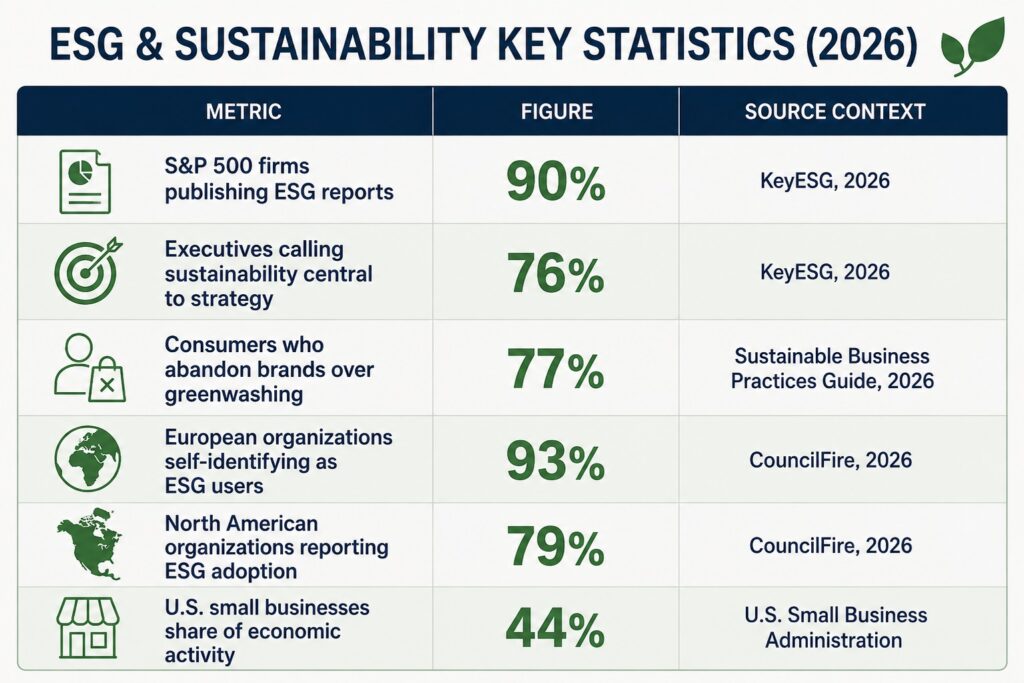
These numbers show adoption spreading beyond large enterprises. Small and mid-sized firms now sit inside a much bigger conversation.
Investor confidence still lags reporting volume. Fewer than a third of investors believe current disclosures explain real business impact. Poor data quality remains a widely cited obstacle. This gap creates an opening for smaller firms that report clearly and consistently. Clean, honest data can become a genuine competitive advantage.
Why Green Finance Matters for Smaller Firms
Green finance refers to funding tied to environmental projects. Solar installations, efficient equipment, and cleaner vehicle fleets all qualify. Lenders often reward these projects with better terms.
Green loans now reach smaller businesses more often than large corporate bond markets. Research on green lending shows measurable outcomes. Borrowing firms saw operating income rise after loan issuance. They also reported measurable emissions reductions per dollar of revenue.
Several funding paths exist for smaller firms:
- Bank-backed green loans – Many banks now offer discounted rates for verified sustainable projects.
- Government-guaranteed programs – Public schemes reduce lender risk and expand eligibility.
- SBA-supported financing – Existing loan programs increasingly fund clean energy upgrades.
- Blended financing – Owners combine standard loans with grants and tax credits.
A general contractor upgrading to efficient equipment might not find a dedicated “green loan.” Standard financing paired with available tax credits often works just as well. The label matters less than the underlying strategy.
Consider a small food distributor replacing an aging delivery fleet. Electric vans cost more upfront than gas-powered alternatives. A blended financing package, however, changes that math. Federal tax credits offset part of the purchase price. A discounted equipment loan covers the remainder. Lower fuel and maintenance costs then repay the difference over several years. This pattern repeats across industries, from bakeries upgrading ovens to print shops switching to efficient machinery.
Insurance carriers have started noticing these patterns too. Some now offer modest premium reductions for verified efficiency upgrades. That extra savings rarely drives a decision on its own. Combined with financing benefits, though, it strengthens the overall case for action.
Common Obstacles Smaller Businesses Face
Smaller firms encounter real barriers here, and these barriers differ from those facing large corporations.
Data gaps create the first obstacle. Many owners lack baseline emissions figures. Tracking energy, water, and waste requires new systems many firms have never built.
Staffing gaps create a second obstacle. Large corporations employ dedicated sustainability teams. Small firms rarely have that luxury.
Cost concerns create a third obstacle. Upfront reporting or certification costs can feel steep. Owners must weigh those costs against long-term financing benefits.
Complexity creates a fourth obstacle. Standards vary by region, industry, and lender. Tracking shifting requirements takes real effort.
These challenges explain rising demand for outside expertise. Many owners cannot solve every problem internally.
Time itself creates a fifth obstacle. Owners already juggle daily operations, payroll, and customer demands. Adding detailed emissions tracking feels impossible without extra support. This reality pushes many firms toward outside partners rather than internal hires.
Fear of misstatement adds a final layer. Owners worry about overstating progress or making claims regulators later challenge. That fear sometimes leads to silence instead of honest, modest reporting. Silence, however, carries its own risk in a market that increasingly expects transparency.
Where ESG Consulting Fits In
ESG consulting services help bridge these exact gaps. A consultant can assess current practices, identify missing data, and build reporting systems suited to firm size.
Good consulting work typically includes:
- Baseline emissions and resource audits
- Governance and policy documentation
- Supply-chain risk assessments
- Reporting frameworks matched to actual regulatory exposure
Owners should avoid one-size-fits-all packages. A ten-person firm needs different tools than a two-hundred-person company. Sustainability consulting 2026 increasingly emphasizes scaled, practical solutions over sweeping corporate frameworks.
Cost remains a real factor. Smaller firms should seek consultants offering phased engagements. Start with an audit, then build reporting systems gradually. That approach spreads cost over time and avoids wasted spending on unnecessary features.
Owners should also ask consultants pointed questions before signing contracts. Request examples of past work with similarly sized firms. Ask how reporting systems transfer to internal staff over time. A strong consultant builds internal capacity rather than creating long-term dependency. That distinction separates genuinely useful partners from expensive intermediaries.
Practical Steps for Owners
Firms ready to act can follow a simple sequence.
Step one: assess current practices. Document existing energy use, waste habits, and governance policies. This baseline informs every later decision.
Step two: identify priority risks. Supply-chain requirements, lender expectations, and regional regulations vary. Focus effort where exposure is highest.
Step three: explore financing options. Compare standard loans, green-specific products, and government-backed programs. Many owners overlook available tax incentives entirely.
Step four: consider outside expertise. A short-term consulting engagement often costs less than the mistakes it prevents.
Step five: report consistently. Sporadic reporting undermines credibility. Regular, honest updates build trust with lenders and customers alike.
Looking Ahead
ESG and green finance will keep evolving through 2026 and beyond. Rules will tighten, and expectations will grow. Smaller firms that engage early gain real advantages over slower competitors.
This shift does not require massive budgets or dedicated departments. It requires clear priorities, honest data, and a willingness to start. Firms that treat sustainability as strategy, not burden, will likely find better financing terms and stronger customer loyalty.
Owners still uncertain where to begin should start small. Pick one metric, track it consistently, and build from there. Progress matters more than perfection in this early stage.
The businesses that adapt now will define the market later. Those that wait may simply follow rules written by others.