Startup to Scale Up: Growth Strategy Mistakes to Avoid in 2026
by Sovina Vijaykumar
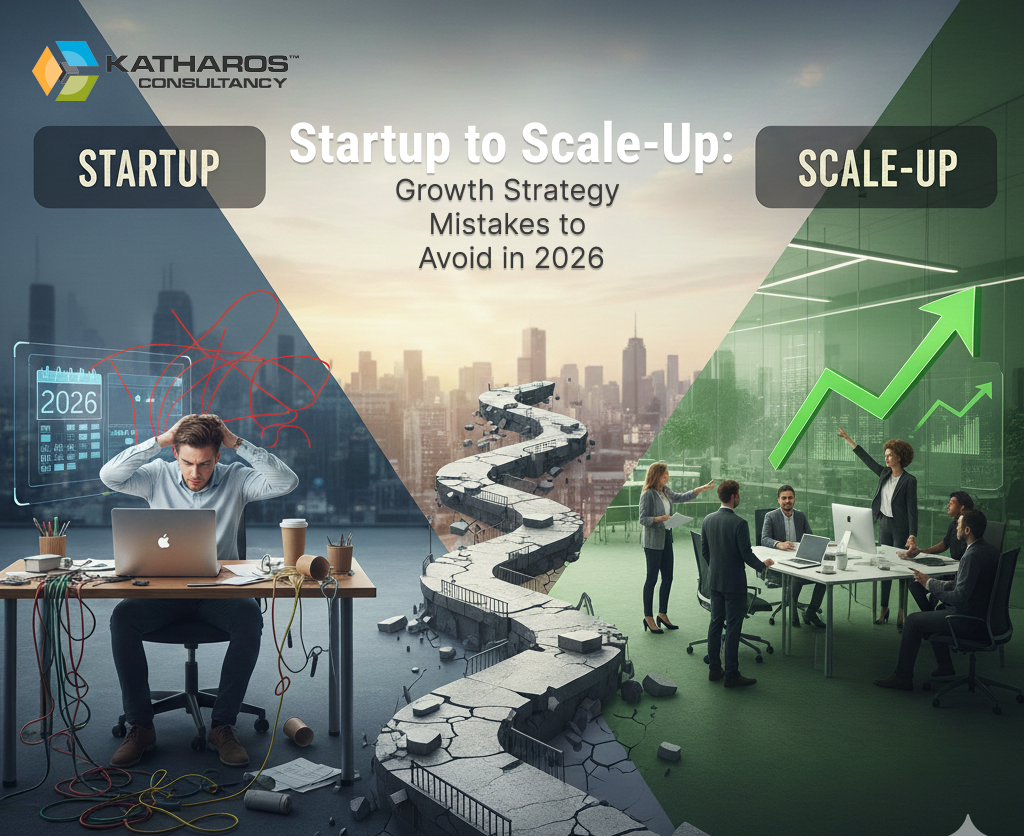
The startup world in 2026 looks very different from what it did even three years ago. Capital is still available, but it is cautious. Customers are informed, impatient, and quick to switch. Technology lowers entry barriers but raises expectations. What this really means is simple: starting a business is easier than ever, but scaling one has become brutally unforgiving.
Many founders still assume that if the product works and revenue grows, scale will follow naturally. That assumption is quietly killing promising companies. Startup scaling today is less about speed and more about discernment. Less about chasing growth and more about sustaining it. Less about short-term wins and more about long-term resilience.
This is where most startup strategy mistakes happen. Not at launch, but in the messy middle between early traction and real scale.
Let’s break down the most common growth strategy errors startups make as they move from startup to scale up, and more importantly, how to avoid them in 2026.
Startup to Scale Up Is a Different Game
Here’s the thing: most founders do not hear early enough. Running a startup and scaling a business are fundamentally different challenges, requiring different mindsets, decisions, and disciplines.
In the early stage, energy compensates for inefficiency. Decisions are fast. Teams are small. Founders are close to customers. Improve text. Give me one answer: Informal processes turn into bottlenecks. Gut-driven decisions stop working. Founders become the constraint.
This is the point where early startup challenges turn into far more complex growth challenges.
At scale, the problems startups face are rarely about ideas. They are about execution, alignment, and repeatability.
Many startup company challenges appear only after revenue starts flowing. Hiring becomes harder. Quality becomes inconsistent. Internal communication breaks down. Without recognizing this shift early, businesses often get stuck between startup and scale-up, growing in size without building real strength.
Mistake One: Scaling Without a Clear Startup Company Strategy
One of the most damaging startup strategy mistakes is confusing activity with direction.
Many startups scale by reacting. A new market opens, and they enter. A competitor launches a feature, and they follow. Revenue grows, so they hire. On paper, everything looks fine. Underneath, there is no coherent startup company strategy tying these moves together.
Scaling without a strategy leads to fragmented teams, bloated costs, and unclear priorities. Growth feels busy, but fragile. When pressure hits, from market shifts or funding cycles, these companies struggle to articulate clearly what they truly stand for.
In 2026, a business scaling strategy must answer uncomfortable questions. What do we deliberately not do? Where do we win uniquely? What capabilities must scale before revenue does?
Without clear answers, startup scaling becomes reactive expansion rather than intentional growth.
Mistake Two: Treating Growth as a One-Size-Fits-All Formula
Scroll through any startup playbook, and you will see the same advice recycled. Hire fast. Expand globally. Push marketing spend. Optimize funnels.
The problem is not that these ideas are wrong. The problem is that the growth strategy for startups is highly contextual. What works for a SaaS startup does not work for a services-led business. What works in one geography can fail spectacularly in another.
In 2026, a startup expansion strategy must be grounded in operating reality. Talent availability, regulatory friction, customer behavior, and infrastructure maturity all shape how scale should happen. Ignoring these nuances leads to overstretch.
This is where a scale-up growth strategy matters. Scaling should follow internal readiness, not external hype. The most successful founders design growth paths that align with their company’s needs, not investor narratives.
Mistake Three: Ignoring the Real Problems Faced by Startups During Scale
When startups struggle, they often blame the market. In reality, most scaling failures are internal.
The problems faced by startups during scale are rarely visible from the outside. Leadership gaps widen as teams grow. Founders who once managed everything now struggle to delegate. Decision-making slows, accountability blurs, and ownership weakens.
Operationally, startup scaling exposes cracks. Processes that worked with ten people collapse at fifty. Technology systems buckle under volume. Customer experience becomes inconsistent.
These startup company challenges compound quietly until growth stalls. By the time founders react, morale is low, and costs are high.
In 2026, successful startup scaling means confronting internal problems early. That includes leadership development, operational discipline, and honest conversations about what must change as the business grows.
Mistake Four: Weak Foundations in the Startup Business Plan
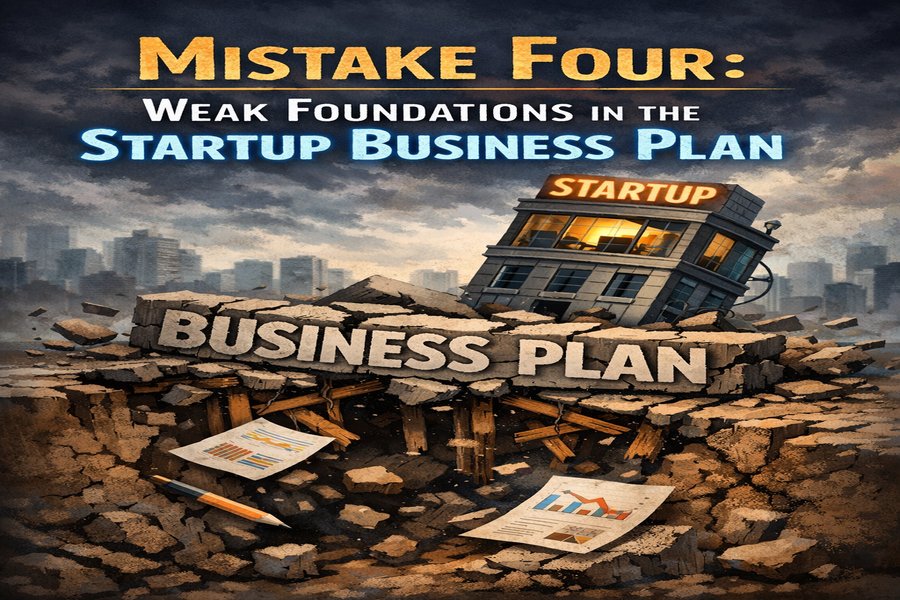
Many founders treat the startup business plan as a fundraising document. Once funding is secured, it gathers dust.
This is a mistake. Scaling a business stresses every assumption in the original plan. Customer acquisition costs rise. Sales cycles lengthen. Sales cycles lengthen. Unit economics shift, and if the business scale-up is built on outdated assumptions, growth becomes risky.
A strong startup business plan evolves continuously. It incorporates scenario planning, margin sensitivity, and capital efficiency. It forces founders to revisit questions they would rather avoid.
In 2026, uncertainty is not an exception. It is the baseline. Businesses that scale successfully do so with plans designed for volatility, not perfection.
Mistake Five: Expanding Before the Business Is Ready
Expanding a business feels like progress. New markets, new teams, new revenue streams. But expansion magnifies weakness as much as strength.
One of the most common startup scaling mistakes is expanding before operational maturity. Founders chase growth while systems lag. Culture fragments. Quality drops. Leadership stretches thin.
Scaling your business requires patience. The discipline to stabilize operations before adding complexity. The willingness to say no to expansion opportunities that look attractive but strain the core.
In 2026, growing a business responsibly means sequencing growth. Strengthen the engine first. Then press the accelerator.
How to Scale a Startup the Right Way in 2026
So how do you scale without falling into these traps?
First, treat scaling as a strategic transition, not a reward for early success. Scaling a business in 2026 requires a systems-level approach. Data replaces instinct. Processes replace heroics.
Second, invest in leadership readiness. Founders must evolve faster than the company. That means building second-line leaders, clarifying decision rights, and letting go of control.
Third, design modular operations. Startup scaling works best when growth does not break the core. Technology, teams, and processes should expand without constant reinvention.
Finally, anchor growth in value creation, not vanity metrics. Revenue matters. Profitability matters. Customer trust matters even more.
This is how to scale a startup sustainably, without burning out people or capital.
A Practical Scale-Up Checklist for Founders
Before pushing growth, ask yourself:
- Do we have a clear startup strategy for 2026, not just goals?
- Is our scale-up growth strategy aligned with how we actually operate?
- Can our leadership team handle double the size without breaking?
- Does our business scaling strategy prioritize resilience over speed?
- Are we growing because it strengthens the business, or because it looks good?
If these answers are unclear, the priority is not to grow your business faster. It is to grow it smarter.
What This Means for Founders
The startups that win in 2026 will not be the loudest or the fastest. They will be the most deliberate.
Scaling is not about doing more. It is about doing the right things at the right time, with the right structure behind them. The difference between startups that survive and those that become enduring scale-up companies lies in the mistakes they choose not to make.
Growth is still possible. But only for those willing to outgrow their startup mindset before attempting to outgrow their market.